
Packed with Purpose | November 11, 2026

1 in 4 Millennials admit a thoughtless corporate gift has made them think less of the sender.
A company gift says something about the relationship. The choice of product, the message on the card, and the care behind the delivery all give recipients clues about how well the sender knows them.
For some recipients, a poorly considered gift has changed their opinion of the person or company behind it. In PwP’s analysis of its corporate gifting survey, 26% of recipients in the age group labeled Millennials said they had received a gift so thoughtless it made them think less of the sender.[1]
That finding gives HR teams and business leaders a reason to look closely at the details of their gifting programs. When appreciation arrives in a box, people notice what it communicates.
The analysis found that 21% of recipients in the same Millennial group had received a corporate gift so bad it felt insulting.[1] These experiences can overlap: a respondent could select both statements.
For this analysis, the Millennial label refers to recipients ages 28 to 43. The 26% figure was the highest observed percentage among the four age groups examined. It describes people’s past experiences with gifts and leaves open what made a particular gift disappointing.
Explore the 2026 State of Corporate Gifting Report for more on recipient preferences and how corporate gifts affect relationships.
An employee receiving a gift may read it as a reflection of how well the company understands them. Details such as dietary preferences, work location, and the occasion being recognized deserve attention before an order is placed.
Imagine sending a food gift to someone whose dietary restrictions you already know. Checking the contents gives that person a chance to enjoy the gesture. For a remote colleague, confirming a delivery address helps ensure the gift reaches them where they work.
Build those checks into the process. Keep preferences current, give recipients a comfortable way to share relevant needs, and ask managers to review the people on their lists. Small decisions made early can help the finished gift feel considered.
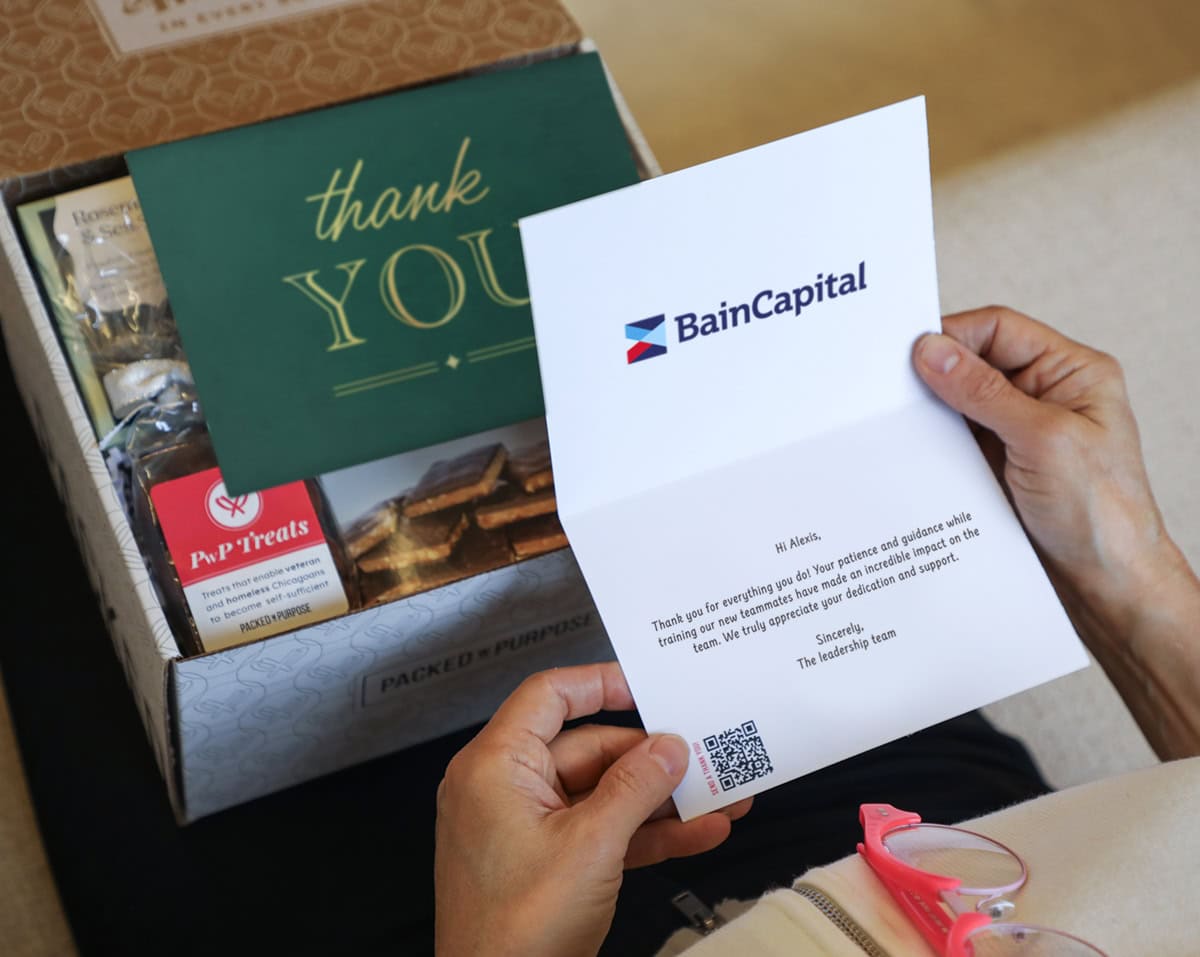
A gift card message is an opportunity to explain what you appreciate. Name the contribution, collaboration, or milestone that prompted the thank-you.
For an employee, that might mean recognizing the patience they showed while training a new teammate. For a client, it could be a note about their team’s responsiveness during a complicated project. Specific appreciation helps someone understand what you noticed.
Make room for that detail when coordinating gifts across a company. The person managing the order can handle logistics, while managers and account leads contribute a few words about each relationship. A shared process can still leave space for individual attention.
Age can prompt useful questions about your gifting program. Individual preferences give you more detail to work with. Consider what someone enjoys, how they will use the gift, and whether it suits their circumstances.
For a team gift, think about how colleagues will share it. For an individual, use interests they have volunteered to guide the selection. Where practical, a small selection of gift options can let recipients choose what appeals to them.
Gifts that give back can add a story to that experience. A product made by a business creating employment opportunities introduces recipients to the people their gift supports. Share a clear explanation of that work. Packed with Purpose includes a Stories of Impact Booklet to help recipients discover the makers and causes behind their gifts.
Consider onboarding, work anniversaries, birthdays, team accomplishments, and holiday appreciation. Choose occasions your organization can recognize consistently, then tailor the message to the employee or team.
Read the full report to bring recipient insights into your employee appreciation and milestone gifting plans.
Sources and Methodology
[1] PwP analysis of PwP/Harris Poll survey data. Weighted cross-tabulation of corporate gift recipients ages 28 to 43 (n=362), using S1Q4b and S1Q4a. Results of 25.7845% and 20.5674% round to 26% and 21%. Respondents could select multiple experiences. The original age-band analysis uses 18 to 27, 28 to 43, 44 to 59, and 60 and older. These labels are retained for consistency with the tracker and are not birth-year-based generation definitions for 2026.
Research commissioned by Packed with Purpose and conducted online by The Harris Poll from July 23 to 24, 2026, among 2,007 U.S. adults ages 18 and older, including 1,133 corporate gift recipients. Percentages are weighted and rounded. The questions concern corporate gifts from any source. The practical recommendations apply the findings to employee and client gifting.